


Description
Columbia Anchor Strap Instructions – 4FT / 6FT
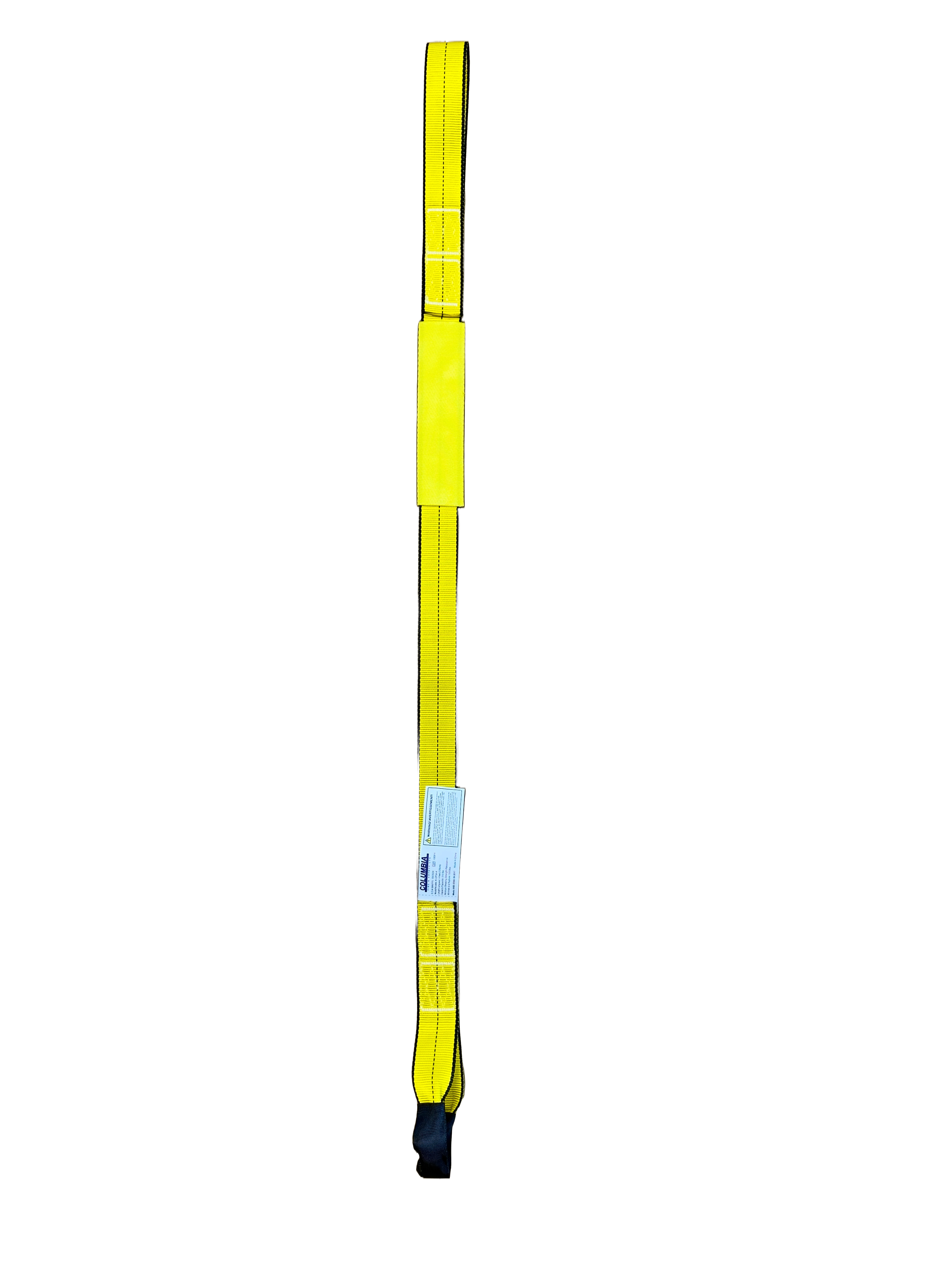
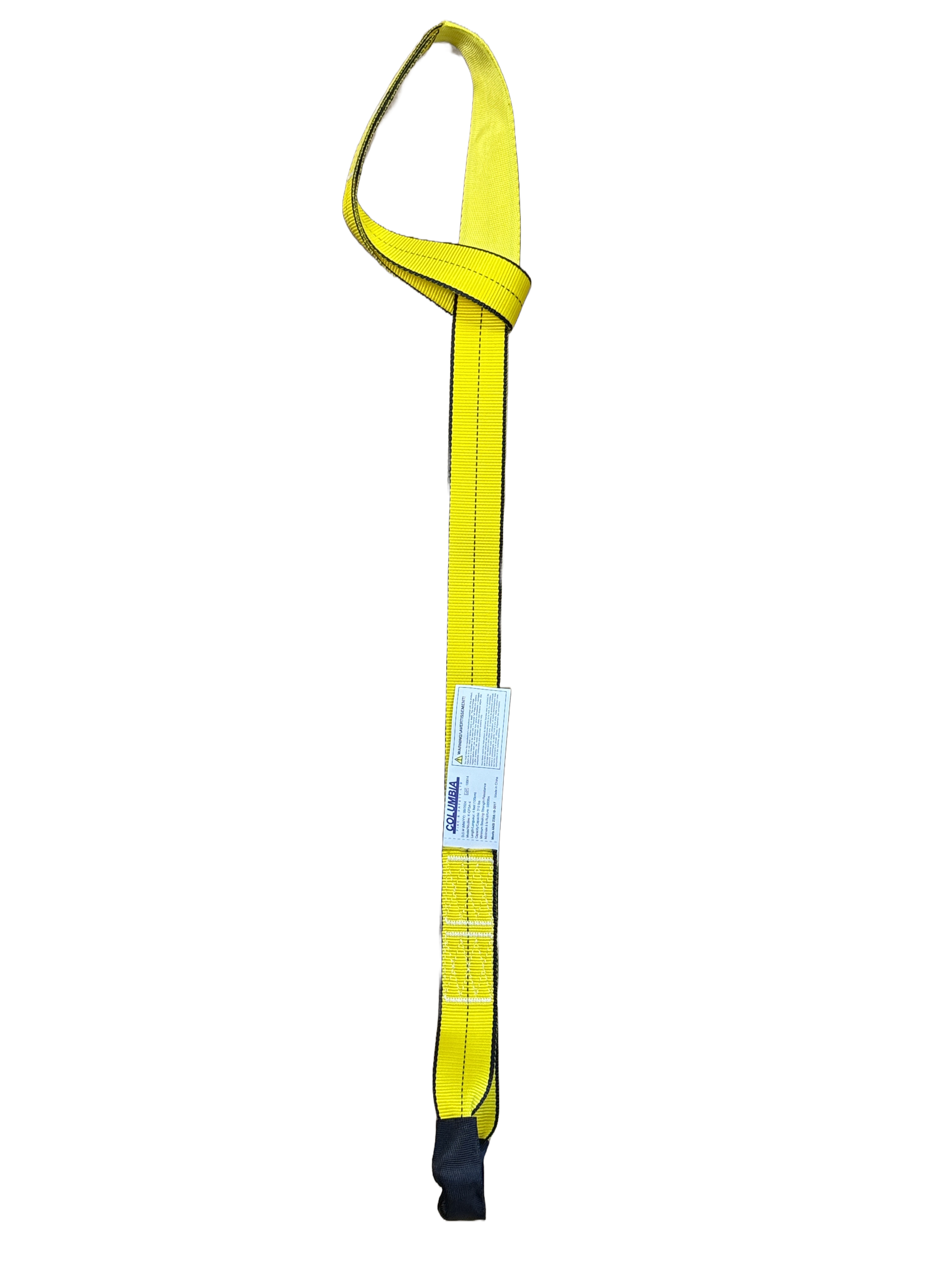
Columbia Anchor Straps are designed as a temporary anchorage connector for use with personal fall restraint or fall arrest systems. Do not hang, lift, pull, or support tools or equipment with the anchor strap.
This anchor strap meets the requirements of ANSI Z359.18-2017 and has a minimum breaking strength of 5,000 lbs in straight pull or choked.
This product is part of a personal fall protection system. These instructions must be provided to the user of the equipment before use and must be retained for ready reference. Alteration, misuse, or failure to read, understand, and follow these instructions may result in serious injury or death. Manufacturer instructions must be followed for all components of the personal fall protection system. Use compatible connections only. For use by qualified users only.
Applications
- Temporary anchorage connector
- Personal fall restraint systems
- Personal fall arrest systems
- Concrete anchorage applications
Capacity
Anchor strap is designed for use by persons with a combined weight of no more than 310 lbs / 140 kg, including person, clothing, tools, and equipment. Only one person may be connected to the anchor strap at one time.
Anchorages
This anchorage connector is intended to be installed on anchorages of sufficient strength capable of supporting the forces associated with the application. The anchorage connector may be choked around suitable anchorage. Refer to local jurisdiction for anchorage strength requirements.
Installation Into Concrete
Select a location for the anchorage that provides the best protection to the user. Once a section of concrete column, shear wall, or slab has been poured and allowed to cure, place the loop end of the concrete anchor over an exposed section of steel reinforcing bar.
The anchoring rebar must be at least 4 in. / 10 cm from the outside face of the poured concrete. Once the concrete anchor is in place, forming of the floor or column may continue. The concrete anchor will be secured by making the next pour and allowing the concrete to cure.
If the rebar cage or mat has already been completed, the single loop anchor strap may be choked around the internal rebar. Position the provided abrasion protection around the strap at the point of exit from concrete.
Inspection
Anchor strap must be inspected by the user before each use to ensure safe operation and additionally by a competent person, other than the user, at intervals of no more than six months.
- Inspect webbing for cuts, burns, wear, frays, writing, discoloration, and chemical damage
- Inspect both sides of the strap for its entire length
- Check all stitching for missing or pulled stitches
- Label must be present and fully legible
- Remove from service immediately if damaged or if inspection fails
Training
Users of this equipment must be trained in its correct application and use. It is the responsibility of the user to ensure they are familiar with these instructions and are trained in the correct care and use of this equipment.
Installation
Anchorage connector must only be installed and removed by a qualified person.
Personal Fall Arrest Systems
Personal fall arrest systems used with this product must have the free fall distance limited to 6 ft / 1.8 m. When used as part of a personal fall arrest system, the system must be used with an energy absorber. Fall arresting forces must not exceed 1,800 lbf / 8 kN.
Swing Fall
A swing fall occurs when the anchorage point is not directly above the point where a fall occurs. The force of impact against objects in a swing fall may cause serious injury or death. Minimize swing falls by working as close to the anchorage point as possible.
Fall Clearance
There must be sufficient clearance below the user to arrest a fall before the user strikes the ground or any other obstruction in the environment.
Environmental Hazards
Additional precautions may be required to prevent injury to the user or damage to the equipment when used in areas with environmental hazards. Hazards may include, but are not limited to, sharp edges, sparks, flames, heat, chemicals, corrosive substances, high voltage power lines, and moving or rotating machinery.
Compatibility
Connecting hardware must be compatible in size, shape, and strength. Non-compatible connectors may accidentally disengage.
Storage
Store the anchorage connector strap in a cool, dry, and clean place out of direct sunlight. Avoid areas where heat, moisture, light, oil, chemicals, chemical vapours, or other degrading elements may be present. Equipment that is damaged or in need of maintenance should not be stored in the same area as usable equipment.
Maintenance
Heavily soiled, wet, or contaminated equipment should be properly maintained, dried, and cleaned before storage.
Removal From Service
Remove the strap from service and destroy immediately if it has been subjected to the forces of arresting a fall or if it fails inspection.
Labeling
The label must be securely attached to the anchorage connector and fully legible.
It is recommended to use the label area to mark the level and strap number for tracking and inspection purposes. When installed into concrete, keep record of the person who installed the straps and the person who inspected them prior to concrete pour. Taking a photograph of the anchor strap connection prior to concrete pour is also suggested.
User Manual PDF